



-
本所概况
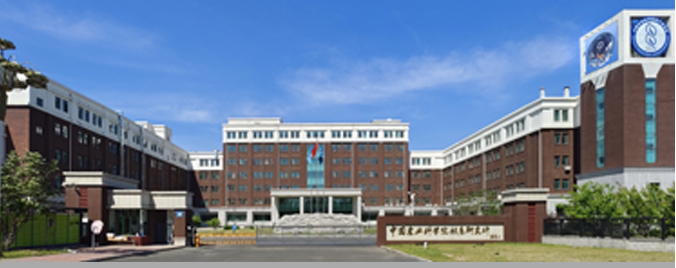
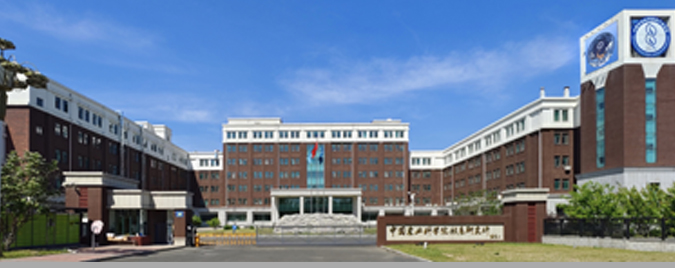
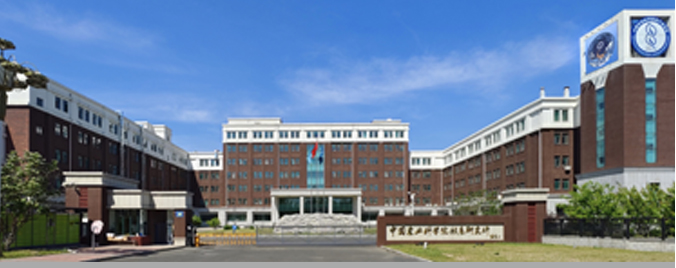
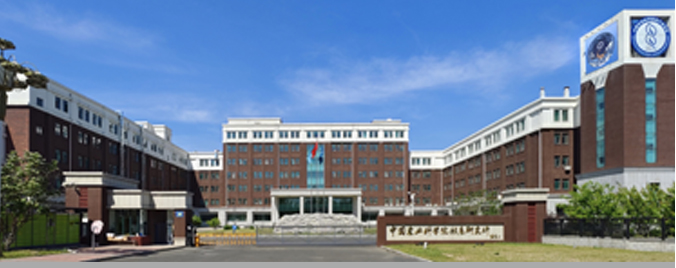
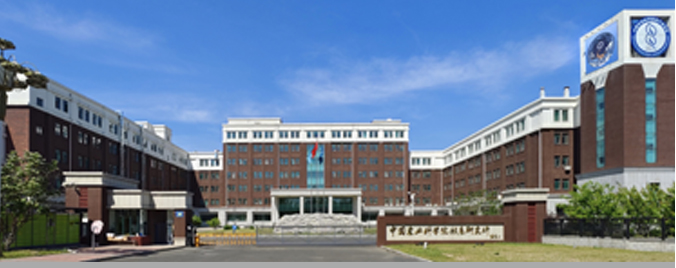
中国农业科学院特产研究所(简称特产所)建于 1956 年,是全国唯一的专门从事特种经济动植物资源保护、开发与利用的国家级综合性农业科研机构,也是中国农科院在吉林省的唯一直属单位,主要研究对象为珍贵、稀有、经济价值高的特种经济动植物。
-
机构设置
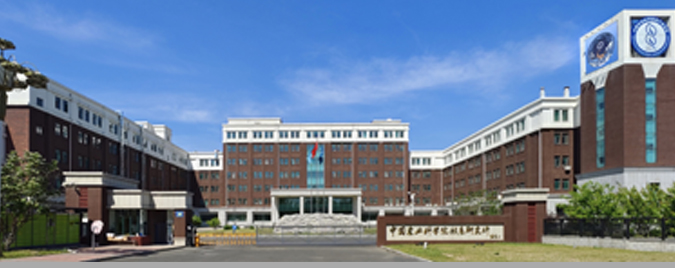
本所构建了分工清晰、运转高效的组织体系,下设创新团队、支撑部门、职能部门与所办企业四大板块,其中创新团队主攻科研攻关,支撑部门提供技术保障,职能部门负责行政管理,所办企业推动成果转化。
-
科技创新
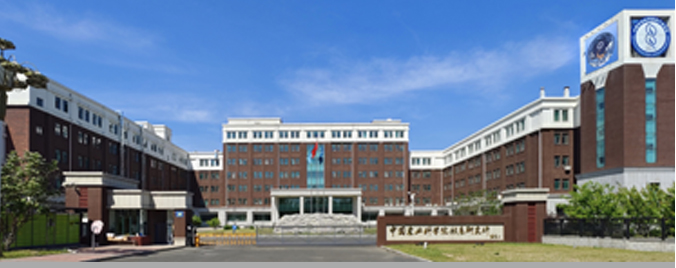
本所持续完善科研创新体系,稳步建设各级科研平台,聚力开展特种经济动植物领域基础研究与技术攻关,为产业发展提供坚实科技支撑,全面提升核心科研竞争力。
-
人才队伍
-
成果转化
-
学会刊物
特产学会与特种经济动物兽医分会搭建行业学术交流网络,《特产研究》《特种经济动植物》专注刊载特种经济动植物科研成果,汇聚科研力量,传播前沿技术,为产业发展搭建高水平学术阵地。
-
研究生教育
-
党建文化
 首页
首页科研成果

论文
Glycine and betaine improve the quality of cryopreserved sika deer sperm
作者:彭飞宇1、刘理想1、杨镒峰、张旭林、张燠诗、范冰峰、褚萧宇、曹杰、张颖、赵伟刚、唐毓*、许保增*
刊物名称:Cryobiology
发表年月:2026.02.18
摘要内容:Sperm cryopreservation imposes osmotic stress due to the addition and removal of high-concentration cryoprotectants. Whether organic osmolytes can alleviate this stress to improve cryopreservation efficiency remains unclear. Here, we evaluated the effects of glycine and betaine, supplemented as organic osmolytes throughout the cryopreservation process, on the quality and developmental potential of cryopreserved sika deer sperm. Pooled semen samples from five healthy adult stags were randomly allocated to four groups: a control (base extender) and three treatment groups supplemented with glycine and betaine at 6 mM + 200 μM, 10 mM + 500 μM, and 14 mM + 800 μM, respectively. The addition of 10 mM glycine and 500 μM betaine significantly improved post-thaw sperm quality, including enhanced total motility (TM), progressive motility (PM), average path velocity (VAP), curvilinear velocity (VCL), plasma membrane and acrosome integrity, and fertilization capacity, while reducing reactive oxygen species (ROS) levels compared with the control and other treatments. These findings suggest that glycine and betaine at 10 mM and 500 μM, respectively, may mitigate cryo-injury and enhance cryosurvival in sika deer sperm, offering a promising strategy for improving semen cryopreservation and artificial insemination protocols
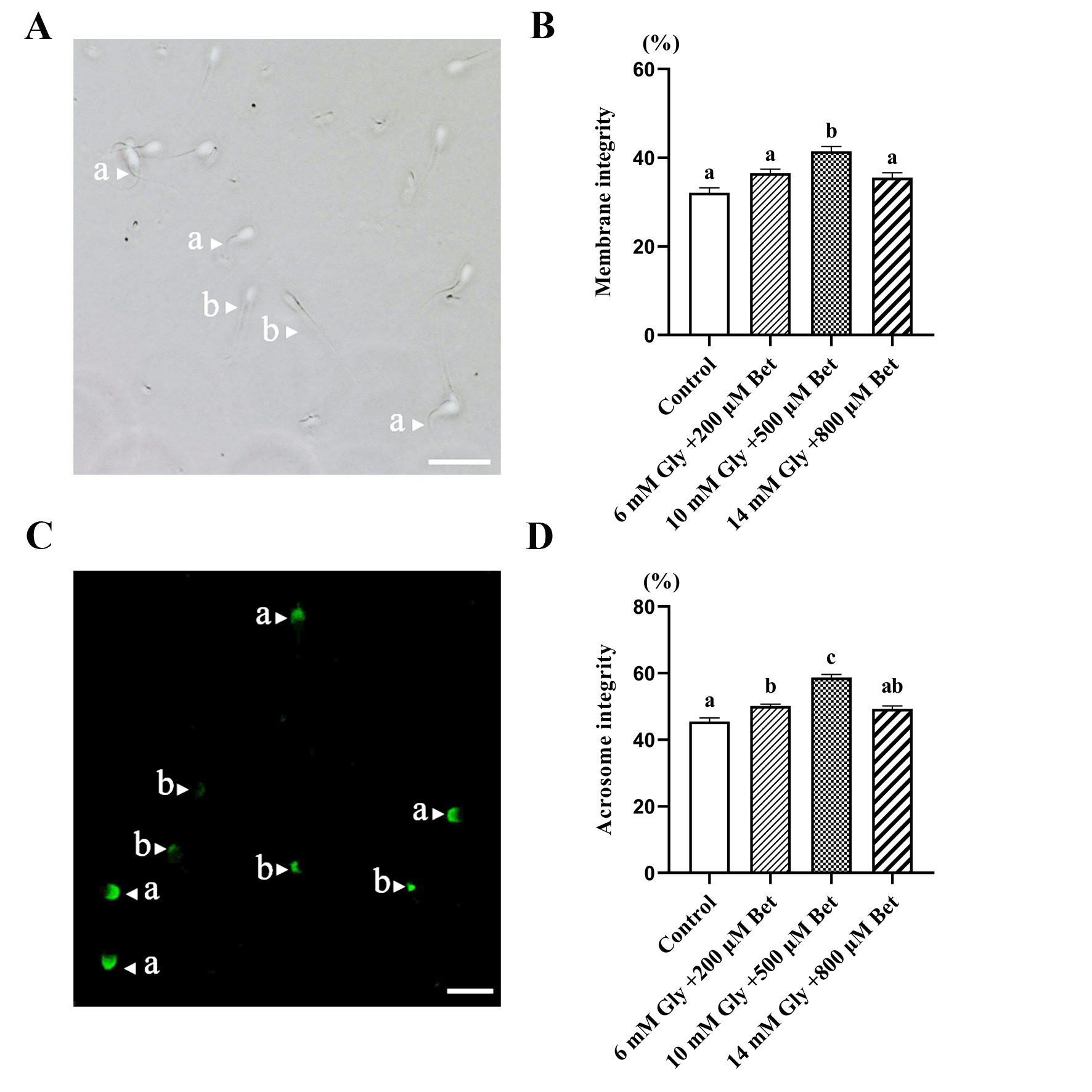
Figure 2. Glycine and betaine protect sperm membrane and acrosome integrity after thawing. (A) Detection of sperm plasma membrane integrity by HOST (scale, 50 μm). a: sperm with intact plasma membrane, b: sperm with damaged plasma membrane; (B) Sperm plasma membrane integrity statistics; (C) Acrosomal integrity of sperm detected by FITC-PNA staining (scale, 20 μm). a: sperm with intact acrosome, b: sperm with damaged acrosome; (D) Acrosome integrity statistics of sperm.
原文链接:DOI: 10.1016/j.cryobiol.2026.105597