



 首页
首页科研成果

论文
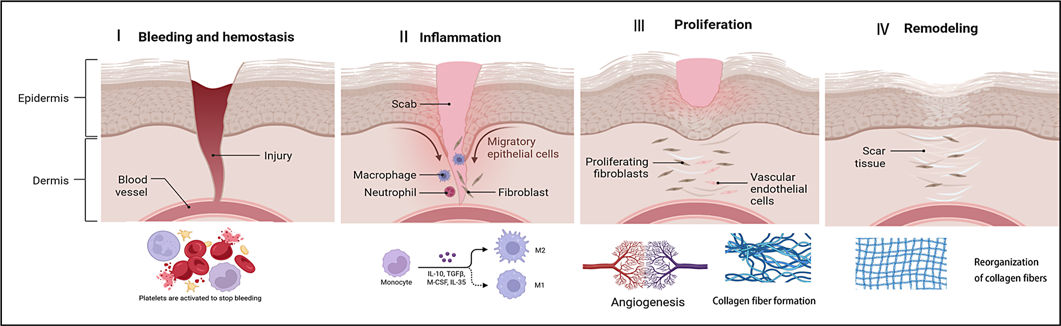
Exosomes Derived from Antler Stem Cell Promote Regenerative Burn Healing by the Facilitation of Angiogenesis and the Polarization of M2 Macrophages
作者:Jianwei Zhao, Jue Zhou, Xunsheng Li, Jinpeng Lv, Yidi Jiang,Yimin Wang, Hang Zhang, Bo Cui, Hongmei Sun,
刊物名称:Cells Tissues Organs
发表年月:2025
摘要内容:Introduction: The underlying mechanisms by which theseexosomes facilitate healing in deep burns remain unclear. Thisstudy aimed to investigate the effect of antler stem cell (AnSC)-derived exosomes (AnSC-exos) on burn wound healing and toprovide new insights for the clinical treatment of deep burn wounds. Methods: AnSC-exos were isolated throughultracentrifugatio n and subsequently administered to rat models with severe third-degree burn injuries. Wound closure rates, histological analysis, immunohistochemistry results and quantitative real-time PCR analysis were performed. In vitro, we assessed the effects of AnSC-exos on the proliferation and migration of human umbilical vein endothelial cells (HUVECs). Results: Our results convincingly demonstrate that AnSC-exos signi?cantly enhance the speed and quality of healing in burn wounds. At 28 days post-burn injury, we found elevated levels of CD31 and CD163 in the healing tissues, accompanied by a reduction in iNOS levels.Additionally, the relative mRNA expression levels of ColA2/Col3A1 and TGF-β1 were signi?cantly lower than the AnSC-exos group compared to the control group (p < 0.001, p < 0.0001), while the relative mRNA levels of MMP3 were signi?cantly higher (p < 0.05). In vitro, AnSC-exos promotes the proliferation and migration of HUVECs. Conclusion: These results suggest that AnSC-exos facilitate burn wound repair by modulating M2 macrophage polarization, promoting angiogenesis, inhibiting myo?broblast production, and enhancing collagen deposition.
文章关键图片
原文链接:www.karger.com/cto